Candelaria
The Guanche Goddess

Key Takeaways
Few places in Tenerife combine mythology, history, and cultural identity as closely as Candelaria.
The connection between the Virgin of Candelaria and the Guanche goddess Chaxiraxi continues to intrigue historians.
Visiting Candelaria is about much more than religion—it’s an opportunity to understand one of the defining stories of the Canary Islands.

What Is Tenerife's Greatest Historical Mystery?
Few stories have shaped Tenerife as profoundly as the legend of the Virgin of Candelaria.
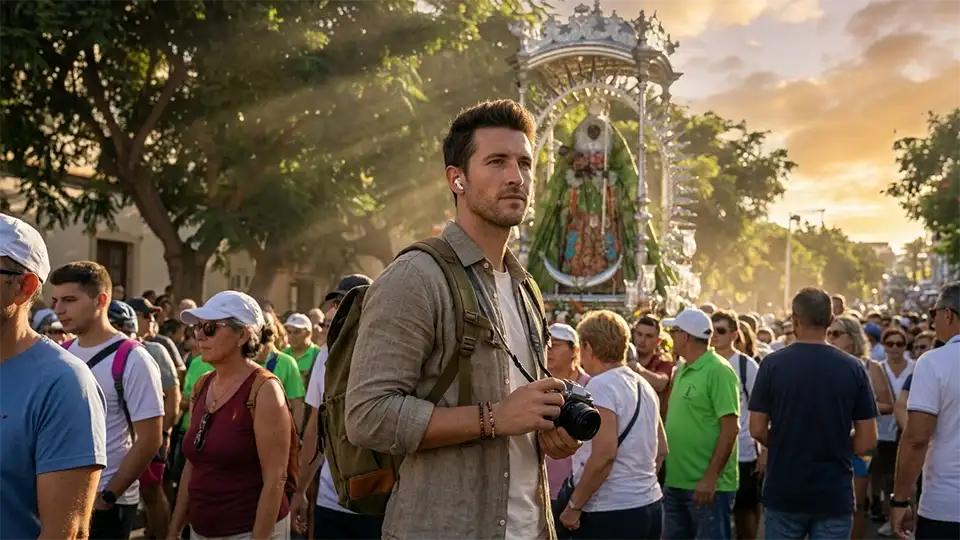
According to centuries-old chronicles, Guanche shepherds discovered a mysterious wooden statue of a woman carrying a child on the island’s southeastern coast before the Castilian conquest. The discovery would eventually transform the religious and cultural history of Tenerife.
But historians still disagree on several essential questions.
Where did the statue come from? Why did the Guanches treat it as sacred? And how did it become one of the most enduring symbols of the Canary Islands?
Those unanswered questions are precisely what make the story so compelling today.
Who Were the Guanches—and Who Was Chaxiraxi?
Before the arrival of Europeans, Tenerife was home to the Guanches, the island’s indigenous inhabitants. They had their own language, beliefs, political organization, and spiritual traditions, many of them closely linked to nature and sacred places.
Later historical sources mention a female figure known as Chaxiraxi, often associated with motherhood, light, or the heavens. Some historians believe that when the mysterious statue appeared, at least part of the Guanche population interpreted it through this existing spiritual tradition.
Whether that connection truly existed remains open to debate, but it offers one possible explanation for why the figure was accepted long before Christianity reached the island.
Why Does the Mystery Remain Unsolved?
The legend lies somewhere between documented history, religious tradition, and oral storytelling.
Some researchers suggest the statue may have reached Tenerife through European sailors before the conquest. Others argue that parts of the story were reshaped by later chroniclers. There is evidence, interpretation, and centuries of devotion—but very few definitive answers.
That uncertainty is part of the appeal. Rather than diminishing the story, it invites visitors to see Candelaria as a place where archaeology, mythology, and history overlap.
When I visited the town, I realised how difficult it is to appreciate these different layers without some historical context. I happened to explore Candelaria using an immersive self-guided audio experience, and it approached the legend less as a miracle to be accepted than as a fascinating mystery to be explored.
Why Is the Virgin of Candelaria Black—and What Happened to the Original Statue?
One of the first things visitors notice is the Virgin’s dark complexion, which has earned her the affectionate nickname La Morenita.
The original medieval sculpture is thought to have darkened naturally over centuries because of age and candle smoke, placing it among Europe’s many revered Black Madonnas.
Few people also realise that the original statue no longer exists. In 1826, severe flooding swept it into the Atlantic Ocean, where it was lost forever. The image seen today is a later replacement, but the disappearance of the original has only added another chapter to an already extraordinary story.
Is Candelaria Worth Visiting?
Absolutely—but not only for its basilica.
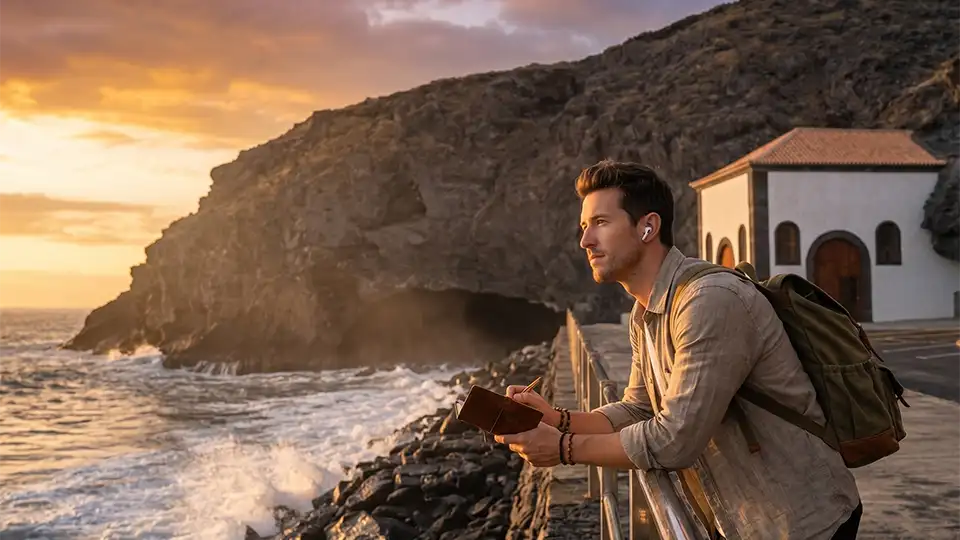
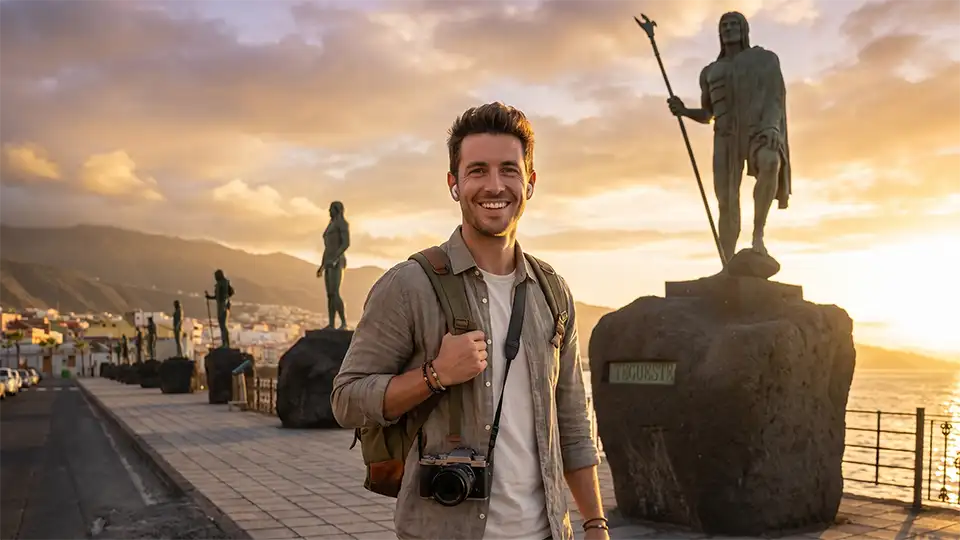
The town combines history, dramatic coastal scenery, indigenous heritage, and one of the Canary Islands’ most important pilgrimage traditions. Visitors can explore the Basilica of Candelaria, the Cave of Achbinico—traditionally regarded as the first sanctuary of the mysterious figure—and the impressive bronze statues representing Tenerife’s nine Guanche menceyes.
Even those with little interest in religion often find themselves drawn into the story because it says so much about the island’s identity.
Why Does the Story Still Matter?
The legend of Candelaria is about far more than a single religious image.
It reflects the encounter between two cultures, showing how traditions can adapt, merge, and survive across centuries. For many Canarians, it represents a shared heritage where indigenous memory and later Christian devotion became part of the same cultural identity.
Perhaps that is why the mystery continues to fascinate historians and travellers alike. Not because every question has been answered, but because the most interesting ones remain open.
Looking Beyond the Legend
Before visiting Candelaria, I expected to see an important religious sanctuary. What I hadn’t expected was to discover a place where almost every corner carries traces of a much older story.
The basilica, the ancient cave, the statues of the Guanche kings, and even the seafront all become far more meaningful once you understand how they connect. In my case, following an immersive self-guided audio tour changed the way I experienced the town. Rather than simply identifying landmarks, it linked them through historical sources, local traditions, and the many questions that historians still debate today.
I left Candelaria with the feeling that its greatest attraction isn’t a monument at all. It’s the mystery itself—and the different ways each visitor chooses to interpret it.
-
ExperiencesExperiences
-
JournalJournal
-
GuideGuide
-
Terms&CreditsTerms&Credits