Puerto de la Cruz
More Than Agatha Christie

Many visitors come to Puerto de la Cruz for its black-sand beaches, botanical gardens and relaxed atmosphere.
Others arrive because they know Agatha Christie once stayed here.
But after spending a day exploring the town, I realised that Christie is only one chapter in a much longer story.
Puerto de la Cruz isn’t simply one of Tenerife’s oldest tourist destinations. It’s a place that has reinvented itself for more than four centuries, where merchants, sailors, aristocrats, artists and travellers have all left their mark.
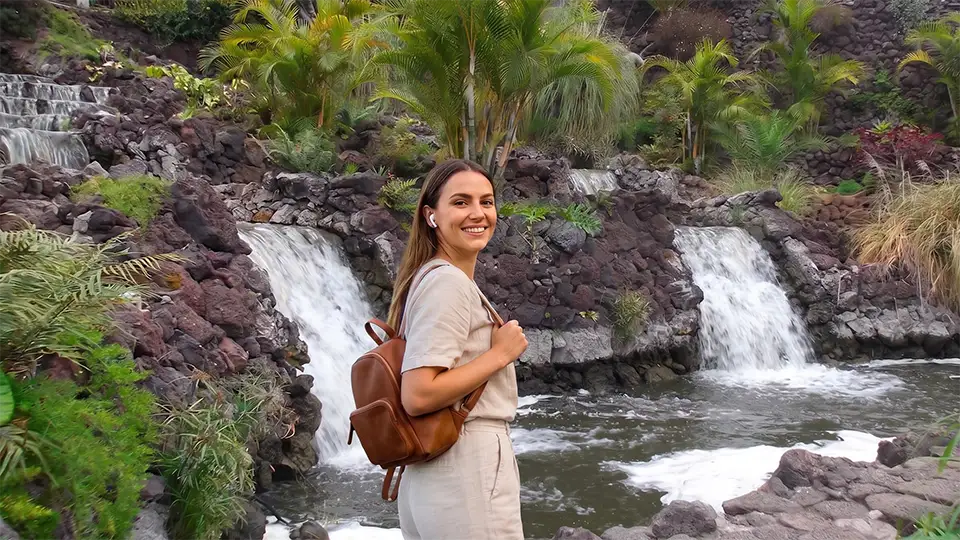
Is Puerto de la Cruz worth visiting?
Absolutely.
If you’re looking for authentic Canarian character combined with history, architecture and ocean views, Puerto de la Cruz is one of Tenerife’s most rewarding destinations.
Unlike many modern resorts, this is a real town where locals still gather in lively squares, fishermen still use the harbour and historic churches stand only a few streets away from contemporary art and cafés.
It’s easy to explore on foot, and every neighbourhood reveals a different side of its history.
Why is Puerto de la Cruz famous?
Originally, Puerto de la Cruz was exactly what its name suggests: the port that served the wealthy town of La Orotava.
During the 17th and 18th centuries, ships loaded with Canary wine departed from here for England and the Americas. Merchants from across Europe passed through its harbour, turning the town into one of the island’s main gateways to the Atlantic.
Then everything changed.
In the late nineteenth century, visitors began arriving not to trade—but to recover their health.
The mild climate attracted wealthy Europeans escaping harsh northern winters, and Puerto gradually transformed into one of Spain’s earliest luxury holiday destinations.
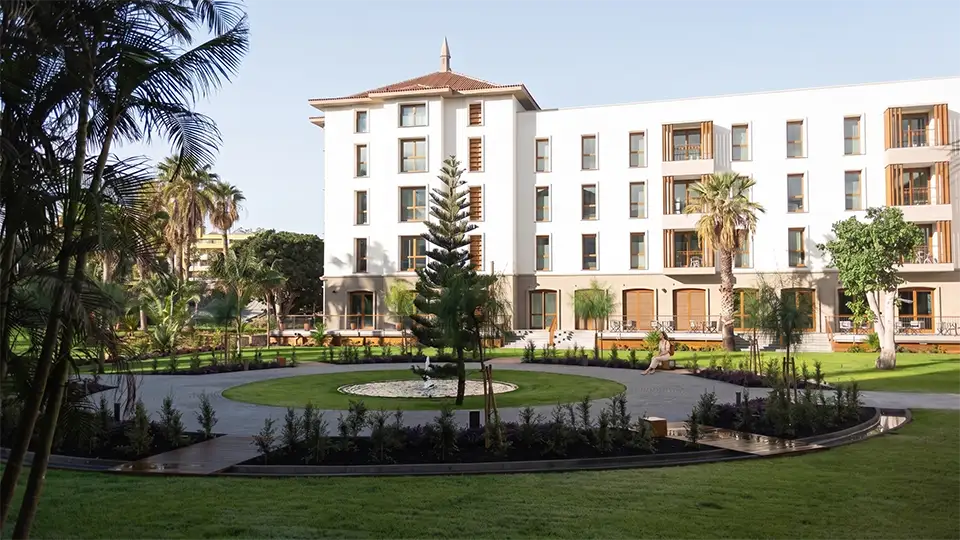
Did Agatha Christie really visit Tenerife?
Yes.
Agatha Christie stayed at the legendary Gran Hotel Taoro in 1927 during one of the most difficult periods of her life, following the death of her mother and the breakdown of her marriage.
Many biographers believe the island offered exactly what she needed: tranquillity, beautiful surroundings and enough distance from public attention to begin writing again.
Whether Tenerife directly inspired her novels remains open to debate, but it’s widely accepted that she worked on The Mystery of the Blue Train during her stay.
Standing on the terraces overlooking the Atlantic, it’s not difficult to imagine why she chose this place.
Why was the Gran Hotel Taoro so important?
Long before Tenerife became famous for beach holidays, the Gran Hotel Taoro represented a completely different idea of travel.
Opened in 1890, it is considered Spain’s first grand luxury hotel.
European royalty, diplomats, artists and writers all passed through its elegant halls. Guests came for the climate, the gardens and the slow pace of life that made Puerto de la Cruz unlike anywhere else in Europe.
The hotel became much more than accommodation.
It helped invent tourism in Tenerife.
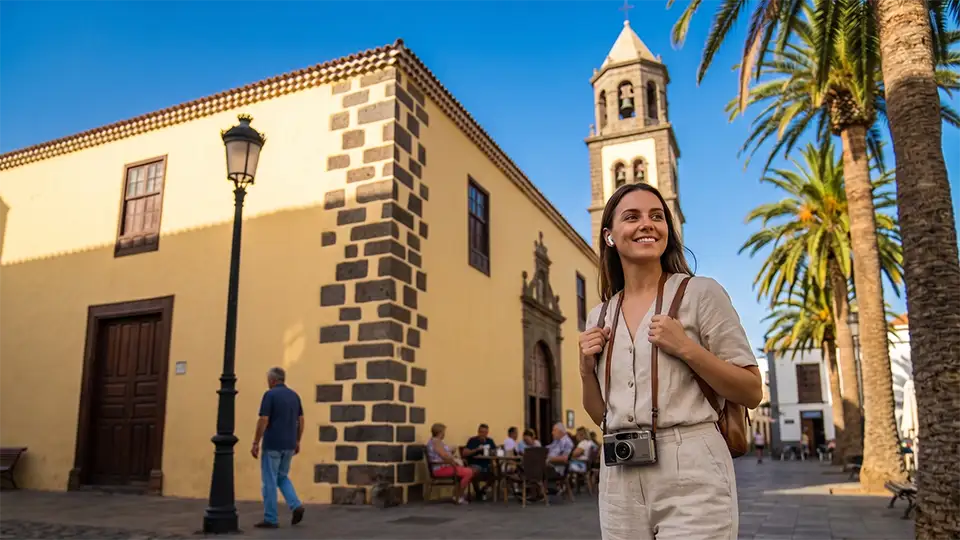
What are the best places to visit in Puerto de la Cruz?
The town’s highlights are surprisingly varied.
Taoro Park offers panoramic views over the rooftops and the Atlantic.
The historic centre preserves churches, traditional Canarian houses and quiet squares that still reflect the town’s maritime past.
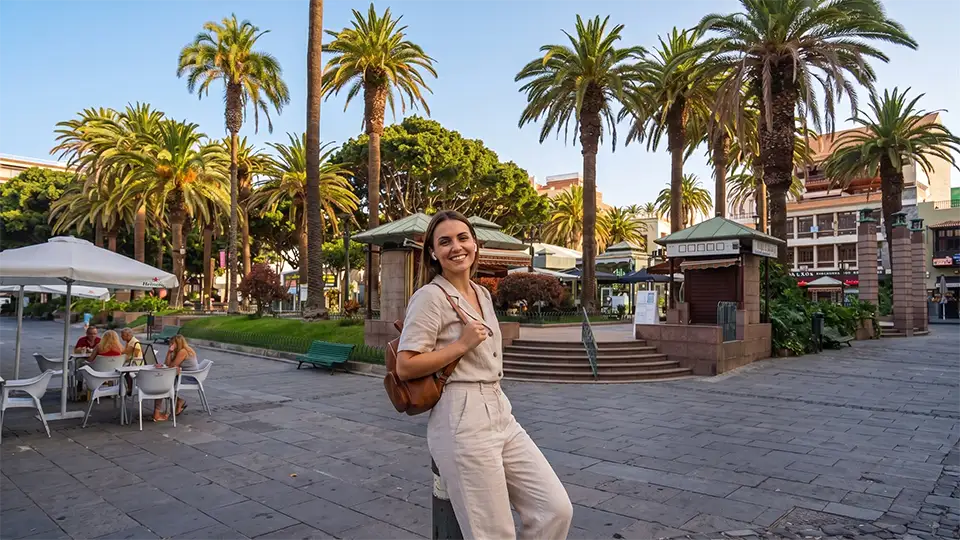
Plaza del Charco remains the social heart of Puerto de la Cruz, where locals and visitors naturally mix throughout the day.
Lago Martiánez, designed by César Manrique, transformed a rugged volcanic coastline into one of the Canary Islands’ most original public spaces by blending architecture with nature rather than replacing it.
And if you wander into La Ranilla, you’ll discover one of the island’s most vibrant collections of urban art, where colourful murals have given new life to the old fishing quarter.
Is Puerto de la Cruz walkable?
Very much so.
Most of the historic centre can be explored comfortably on foot in a single day.
One of the pleasures of Puerto de la Cruz is that there is no need to rush. The distances are short, the streets invite wandering and unexpected details appear everywhere: carved wooden balconies, tiny chapels overlooking the sea, old customs buildings and viewpoints where the Atlantic suddenly opens before you.
It’s a town that rewards curiosity more than careful planning.
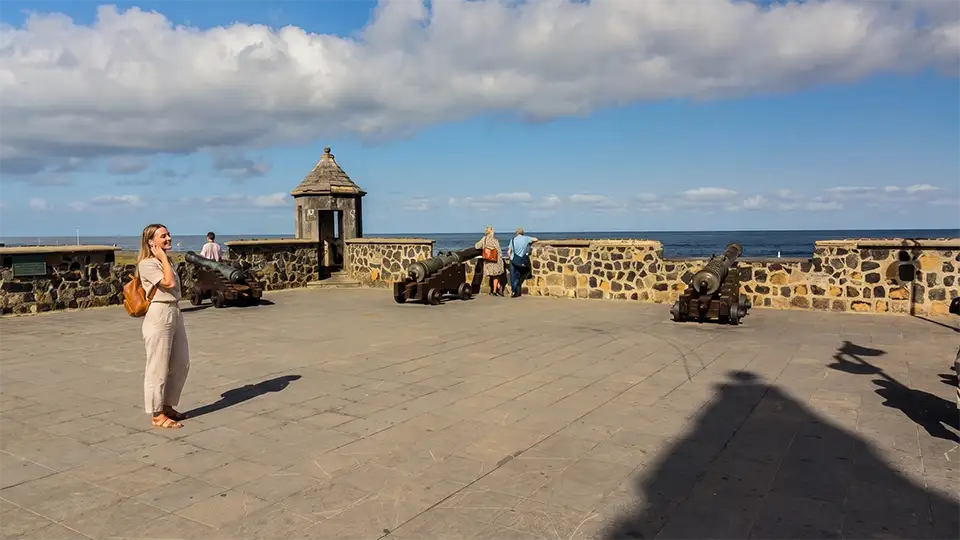
Beyond Agatha Christie
Before visiting, I assumed Agatha Christie would be the main story.
Instead, she became the thread connecting many others.
I followed a self-guided audio tour that used her visit as a starting point, but it quickly expanded into something much broader: the rise of health tourism, the merchants who connected Tenerife with Europe, César Manrique’s vision for the coastline, the old harbour that shaped the town and even the transformation of former fishing streets into open-air art galleries.
It felt like someone quietly explaining why each place mattered.
By the end of the walk, I realised I wasn’t simply recognising monuments anymore.
I was recognising the different lives this town has lived.
And that’s what stayed with me long after I left Puerto de la Cruz.
-
ExperiencesExperiences
-
JournalJournal
-
GuideGuide
-
Terms&CreditsTerms&Credits