La Laguna
Where Ghosts Still Wander

Most people visit San Cristóbal de La Laguna for its colourful streets, colonial architecture and lively cafés.
Few expect it to become one of the most mysterious places in the Canary Islands.
As I wandered through its cobbled streets, I discovered that behind almost every church, convent and noble house lies a story of unexplained footsteps, ghostly apparitions or centuries-old legends. Whether you believe them or not, they reveal a fascinating side of Tenerife that many visitors never experience.
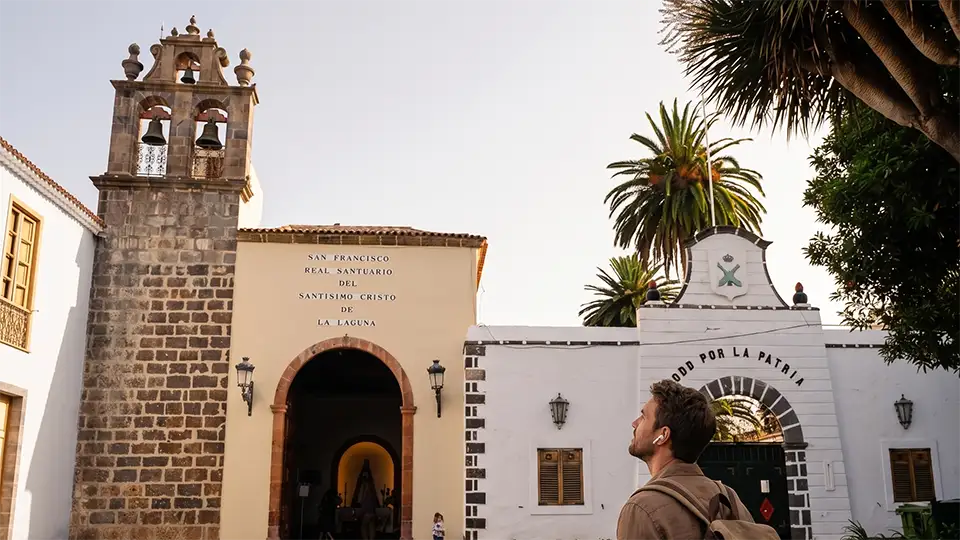
Is La Laguna worth visiting?
Without question.
La Laguna isn’t just another beautiful historic town. Founded in 1496, it became Tenerife’s first capital and later inspired the design of several colonial cities in Latin America. Its remarkably preserved historic centre earned UNESCO World Heritage status in 1999.
Unlike many tourist destinations, La Laguna is best explored slowly. There are no beaches here, no dramatic viewpoints—just elegant streets where almost every building has a story to tell.
Why is La Laguna a UNESCO World Heritage Site?
The city was revolutionary for its time.
Instead of growing inside medieval walls, La Laguna was planned with a grid of wide, straight streets, an urban layout that later influenced Spanish colonial cities across the Atlantic.
Today you’ll find Renaissance churches, monasteries, merchant houses and peaceful courtyards that have survived for more than five centuries.
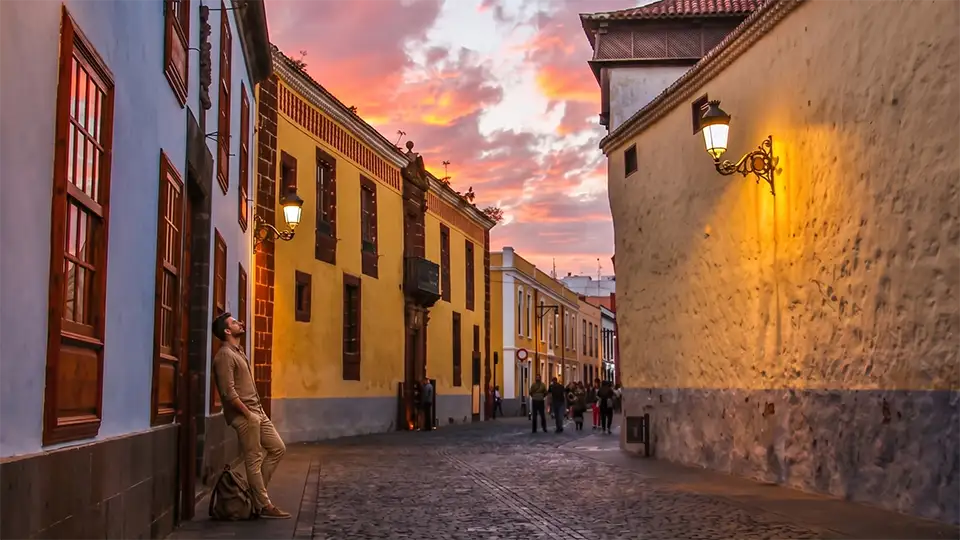
Why is La Laguna famous for ghosts?
Surprisingly, the answer has as much to do with history as with folklore.
For centuries, people have reported strange experiences inside old churches, convents and aristocratic houses. Some stories describe mysterious women dressed in white. Others speak of footsteps echoing through empty buildings or shadowy figures disappearing into the city’s famous evening mist.
Most of these tales began with real places and real people before gradually evolving through generations of storytelling.
Whether they’re true is almost beside the point.
They’ve become part of La Laguna’s identity.
Does La Laguna really get foggy?
Yes—and it changes everything.
Because the city sits more than 500 metres above sea level, moist Atlantic air often drifts through its streets, especially during the cooler months and in the late afternoon.
The fog softens the colours of the old buildings, muffles footsteps and transforms familiar streets into something almost cinematic.
It’s easy to understand how so many local legends were born.
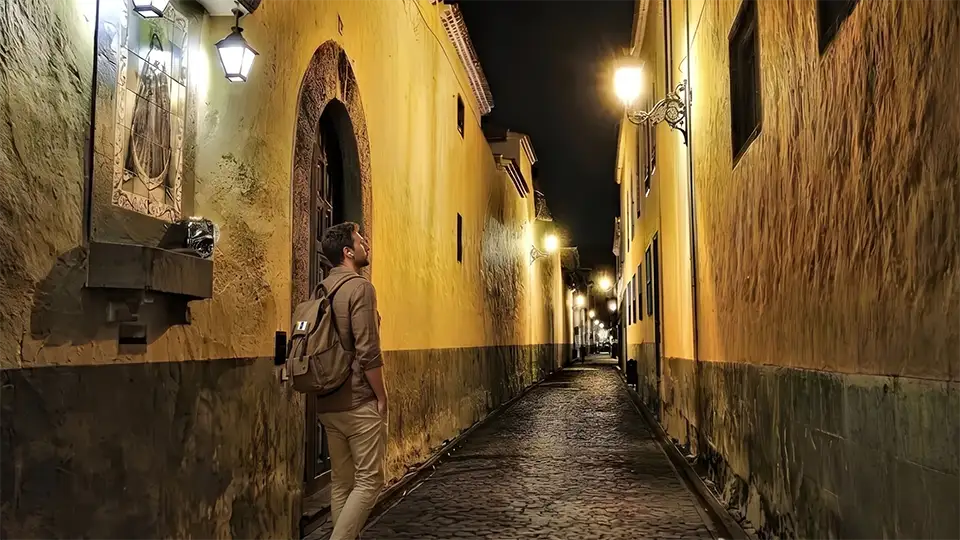
Which places have the most famous legends?
Several historic buildings appear again and again in local folklore.
The Church of La Concepción is linked to one of the city’s oldest legends, involving mysterious events during its construction.
The Lercaro Palace, now home to the Museum of History and Anthropology, is famous for the story of Catalina Lercaro, whose ghost is said to wander its wooden galleries.
Around Plaza del Adelantado, noble houses, convents and quiet courtyards have inspired tales that have been passed from one generation to the next for hundreds of years.
Even visitors who aren’t interested in the supernatural often find themselves drawn into these stories simply because the settings feel so authentic.
How long do you need in La Laguna?
A day is enough to see the main monuments.
But if you want to appreciate the atmosphere, stay longer.
Visit during the day to admire the architecture, then return in the evening when the streets become quieter and the changing light gives the city an entirely different character.
That’s when La Laguna feels most unlike anywhere else in Tenerife.
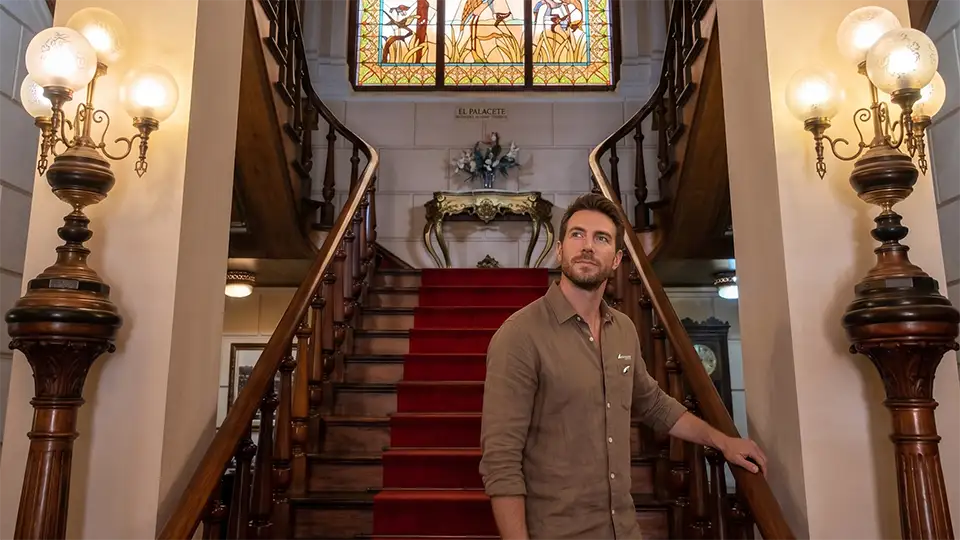
A city that changes once you know its stories
I’ve visited La Laguna several times before.
I admired the colourful façades, the churches and the cafés, but I mostly saw a beautiful historic city.
On my most recent visit I followed a self-guided audio tour that focused on the legends behind the buildings rather than simply describing their architecture.
It never tried to convince me that ghosts exist.
Instead, it explained how history, local memory and centuries of storytelling gradually became woven together until it became impossible to separate fact from folklore.
After that, I found myself looking at every convent, courtyard and narrow street differently.
Not because I expected to see an apparition.
But because I realised the city had been quietly telling these stories for more than five hundred years—and most visitors walk straight past them.
-
ExperiencesExperiences
-
JournalJournal
-
GuideGuide
-
Terms&CreditsTerms&Credits